


A History of the Guitar
Classical Guitar:
Artists 1 |
Artists 2 |
Best Brands |
Anatomy |
History |
Museum |
Links
|
Guitar-like instruments have existed since ancient times (see the Guitar Museum), but the first written mention of the guitar proper is from the 14th century. In its earliest form it had three double courses (pairs) of strings plus a single string (the highest). The guitar probably originated in Spain, where by the 16th century it was the counterpart among the middle and lower classes of the aristocracy’s vihuela, an instrument of similar shape and ancestry with six double courses. The guitar became popular in other European countries in the 16th and 17th centuries, and by the late 17th century a fifth course of strings had been added below the other four. In the mid-18th century the guitar attained its modern form, when the double courses were made single and a sixth string was added above the lower five. Guitar makers in the 19th century broadened the body, increased the curve of the waist, thinned the belly, and changed the internal bracing. The old wooden tuning pegs were replaced by a modern machine head. from The guitar used be called a tavern instrument; one that could not meet the demands of classical music. In the |
Guitars ranging from contrabass to treble, and with varying numbers of strings are played in Spain and Latin America. The twelve-string guitar has six double courses in standard tuning. The Hawaiian, or steel, guitar is laid across the knees of the player, who stops the metal strings by gliding a metal bar along the neck. The strings are usually tuned to the notes of a given chord. The electric guitar, developed for popular music in the United States in the 1930s, usually has a solid, nonresonant body. The sound of its strings is both amplified and manipulated electronically by the performer. American musician and inventor Les Paul developed prototypes for the solid-bodied electric guitar and popularized the instrument beginning in the 1940s. from “Guitar,” Microsoft(R) Encarta(R) 96 Encyclopedia In the early 1940s, a California inventor, Leo Fender, made some custom guitars and amplifiers in his With his knowledge of existing technologies, he knew he could improve on the amplified hollow-body instruments from FENDER MUSICAL INSTRUMENTS CORPORATE HISTORY
|

Classical Guitar:
Artists 1 |
Artists 2 |
Anatomy |
History |
Museum |
Links
“The classical guitar is a descendant of
the lute. It evolved into its modern
appearence in Spain in the early
1800’s. The man responsible for its
modern design was a carpenter named
Antonio de Torres Jurado (1817-1892)”. By 1869, when he sold a guitar to Francisco Tarrega, the guitar had been swept out of the drawing room by the piano and had barely established a toehold in the concert hall. In Spain, which had resisted the piano, the guitar was nonetheless associated with peasants, gypsies and those who play for loose change in bars. The most fundamental thing Torres did was to increase the size of the body. Torres’ concert guitars, introduced in the early 1850s, have soundboards about 20 per cent larger than those of the concert guitars played by Fernando Sor and Dionisio Aguado a few years earlier – from Guitar101 and Guitar Salon International
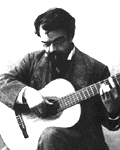
As an instrument of classical music, the guitar came to prominence largely through the efforts of the Spanish composer Francisco Tarrega (1852-1909) and the Spanish guitar virtuoso Andres Segovia (1893-1987).
| Francisco Tarrega
|
Adelita by Francisco Tarrega (tablature) |
While Napoleon Coste and Tarrega were obliged to abandon lucrative concert careers due to serious accidents, Dionisio Aguado,
after a successful sojourn in Paris (1825-1838), decided to isolate himself in Spain. Their importance, therefore, in the history
of the guitar lies principally in their didactic works. Whereas Aguado’s Escuela de guitarra (Madrid, 1825) and Coste’s
edition of Sor’s Méthode pour la Guitare (to which he added many of his own compositions) represent a culmination of 19th
guitar pedagogy, Tarrega‘s works can be considered the foundation of modern guitar technique. His own compositions, and his
transcriptions of classical composers demonstrate a foresight of the expressive capabilities of the instrument that were until then
unexploited.
Miguel Llobet (1878-1938) was Tarrega’s most prestigious student, one of the most famous and well-paid Spanish musicians
of his period who contributed invaluable work in the study of Catalonian folk music. Manuel De Falla dedicated the Homenaje,
pour le tombeau de C. Debussy to Llobet as a tribute to his artistry (1920). In the context of this recording Llobet’s Mazurka
carries us into the 20th century, here represented by the works of Joan Manén (1883-1971) and Nuccio D’Angelo (1955).
Manén, a child prodigy, was an extraordinary violinist, conductor and composer: he gave his first concert as a violinist at age 7,
he conducted his first concert at age 10 and had his first composition performed when he was 13! The Fantasia Sonata, the
only work that Manén wrote for guitar, was dedicated to A. Segovia and was later re-elaborated as his Divertimento, perhaps his most well-known symphonic work.
Mauro Giuliani (1781-1829) guitar virtuoso, heir to the lutenists of old, friend of Beethoven and Rossini, composed concerti, chamber music, and songs, as well as guitar solos and duets.
|
J. A. Hudleston (1799-1865) A Guitarist in Nineteenth Century India Hudleston was born in Bray, County Berkshire, England, on 22 February
|
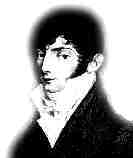 Mauro Giuliani |
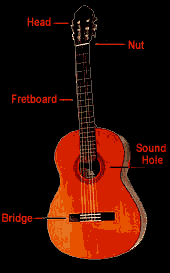
Classical Guitar Anatomy learn about the parts of the classical guitar: Head, Nut, Fretboard, Soundhole & Bridge
Get your own Acoustic Guitar and start playing, or maybe even upgrade.
Paul’s Guitar Museum

by luthier Paul Chabot

Related News:
Guitar String Notes & Their Names
Enjoyed this page? Checkout the rest!
